Here’s the Tea: Why the Second Purchase Matters More Than the First

If you sell something people use up and buy again, like tea, coffee, candles, skincare or supplements, your business doesn't really run on first orders. It runs on second ones.
That's easy to forget when most of your effort goes into getting new people through the door.
A quick look at the numbers
Take a small loose-leaf tea brand selling a $30 tin. Here's a simplified look at what's left from one order, using made-up numbers.
| A new customer | A returning customer | |
|---|---|---|
| Tin of tea | $30 | $30 |
| Product, packaging and shipping | −$15 | −$15 |
| Marketing to bring them in | −$18 | $0 |
| What's left | −$3 | $15 |
The first order is an investment. The second one is where the money is, because you've already paid to win that customer.
Your numbers will look different, but the shape is usually the same for products people reorder. Most of the profit comes from customers who come back.
Why customers don't come back
Usually not because they didn't like the tea. More often:
- They finished it, and by then they'd forgotten where it came from.
- Another brand reached them first, through an ad or a store shelf.
- Nothing gave them a reason to choose you again over trying something new.
The gap between the first and second purchase is where a lot of small brands quietly lose customers.
Common ways brands try to close the gap
Subscribe and save
It turns one-off buyers into repeat orders, but it usually needs a permanent discount to get people to sign up. Plenty of people also cancel early, or skip deliveries when they're not ready for more.
Points programs
Points work well for big brands people buy from constantly. For a smaller shop, collecting 30 points toward a reward 10 orders away rarely feels worth the effort to the customer.
Free shipping thresholds
Good for making orders bigger, but they don't give anyone a reason to come back.
Win-back emails
Useful, but they arrive weeks later in a crowded inbox, long after the customer was most excited about you.
A simpler approach: the reason to come back, at the right moment
In stores, there's a habit that's worked for decades: the coupon tucked in your bag at checkout. 20% off your next visit, valid for the next three weeks. It arrives when you're happiest with the purchase, and its dates give you a reason to go back soon.
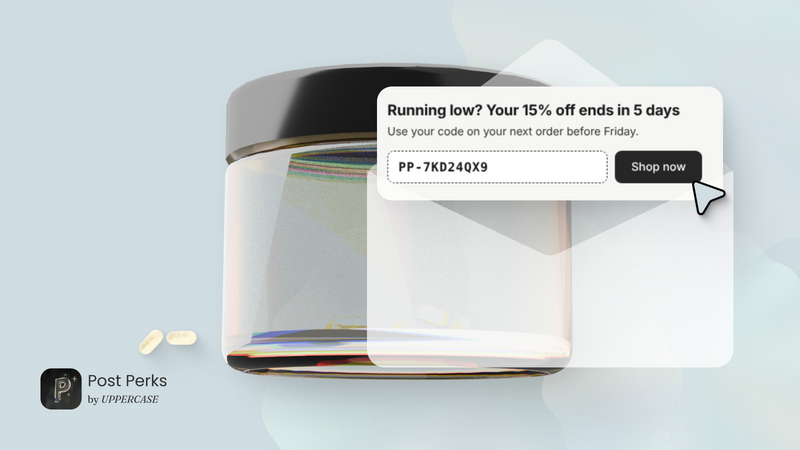
That's the idea behind Post Perks. It brings that coupon online:
- A perk on the thank you page. Customers claim a reward for their next order right after they buy, with dates that match how fast they'll finish the product. For a tin of tea, that might be four to six weeks.
- Rewards that grow with spend. "Spend $50, get more back" makes first orders bigger without forcing anyone into a bundle.
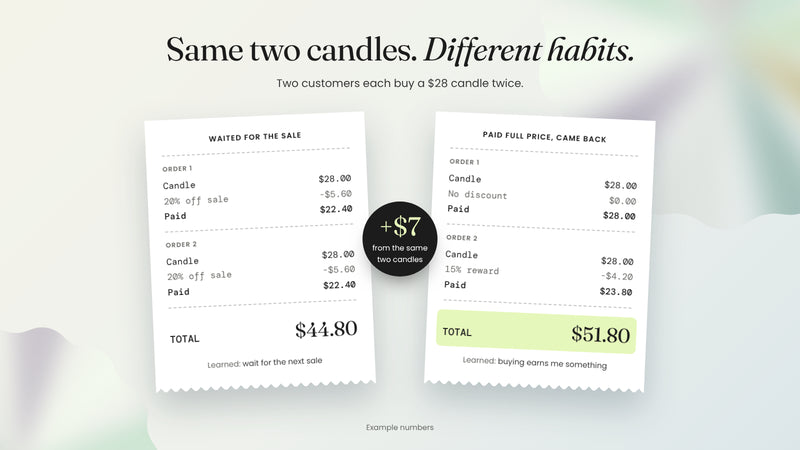
- Store credit instead of discounts. Credit only has value when it's spent with you, so it pulls customers back rather than training them to wait for a sale.
- Reviews and photos from real customers. Customers get rewarded for sharing, and that content makes your product pages and ads more convincing to the next new customer.
In the tea example, a 15% perk on the next $30 tin costs $4.50, and that returning order still leaves more than $10. One second order more than pays for everything it took to win that customer.
Where to start
- Roughly work out what each new customer costs you to win.
- Check your returning customer rate in Shopify Analytics.
- Think about when customers are likely to run out, and give them a reason to come back before then.
The first order gets someone to try you. The second is what builds the business.

Matthew HarrisCo-founder of Uppercase, the team behind Post Perks: the Shopify app that turns first-time buyers into repeat customers.