You're Training Your Customers to Wait for a Sale

Run a sitewide sale and orders jump. It feels like it worked.
Then the sale ends, and things go quiet. Quieter than before, if you look closely. So you run another one.
If that pattern sounds familiar, here's what's probably happening: your customers have learned that your full price isn't your real price. So they wait.
What a sale teaches
A discount before someone buys tells them one thing: this costs less if you're patient.
The customers who learn that fastest are often your best ones. They like your products, they follow you, and they open your emails. They were going to buy anyway. Now they buy when you tell them it's cheaper.
A quick look at the numbers
Take a small candle brand selling a $28 candle. Here are two customers who each buy twice, example numbers.
| Buys in a 20% off sale, both times | Pays full price, then uses a 15% reward | |
|---|---|---|
| First order | $22.40 | $28.00 |
| Second order | $22.40 | $23.80 |
| Total | $44.80 | $51.80 |
| What they learned | Wait for the next sale | Buying earns me something |
That's $7 more from the same two candles. The bigger difference is in the last row. One customer is waiting for your next sale. The other has a reason to come back, and a date to come back by.
Common ways brands try to break the habit
Run fewer sales
The right instinct, but hard to stick to. One slow month and the sale comes back.
Make the discounts smaller
Customers still wait. They just wait for less.
Offer free shipping instead
Good for making orders bigger. It doesn't give anyone a reason to return.
Sell bundles
Better value for the customer, but it's still a discount up front, given before they've bought anything.
A simpler approach: reward the purchase, not the wait
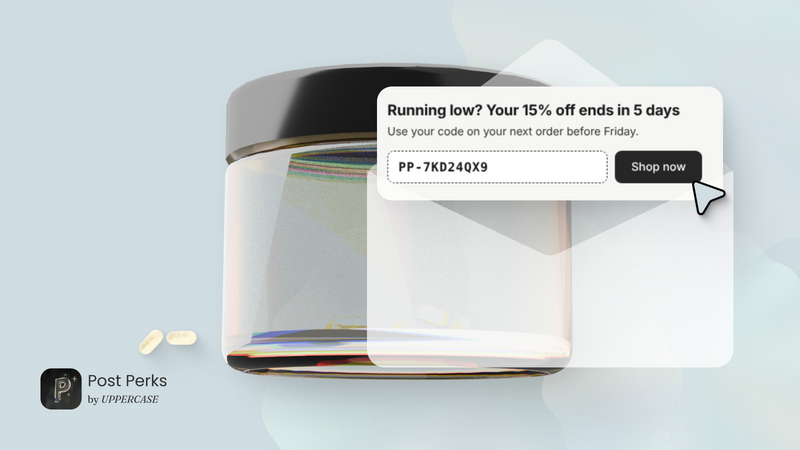
Stores have done this for decades. You pay full price, and the cashier tucks a coupon in your bag: 15% off your next visit, valid for the next three weeks.
It's still a discount. But it works differently:
- It's earned. Only people who bought get it, so you're not discounting for someone who was about to pay full price.
- It has dates. There's a reason to come back soon, not whenever the next sale happens.
- It protects your price. Your store still says $28. The reward is a thank you, not a markdown.
That's the idea behind Post Perks. It brings that coupon online:
- A perk on the thank you page. Customers claim a reward for their next order right after they buy, with dates you choose.
- Store credit instead of a code. Credit only has value when it's spent with you, and it feels like money they already have, not a sale they're waiting for.
- Bigger rewards for bigger orders. "Spend $50, get more back" gives customers a reason to add to their order today, at full price.
- Rewards for reviews and photos. Customers can earn their perk by sharing what they bought, which gives new shoppers a reason to buy without a discount.
Where to start
- Look at your last few months of orders. How many came during a sale?
- Pick one sale you'd normally run, and skip it.
- Give customers who buy at full price something for their next order.
Sales teach customers to wait. A reward after they buy teaches them to come back.

Liz ChanCo-founder of Uppercase, the team behind Post Perks: the Shopify app that turns first-time buyers into repeat customers.